Crowdfunding is a method of raising funds for a project or business by soliciting small contributions from a large number of people, typically via the internet.
It allows entrepreneurs, small business owners, and creatives to bring their ideas to life by securing funding from a community of supporters, rather than relying on traditional sources of capital such as banks or investors.
Importance of Crowdfunding for Small Businesses
Small businesses face many challenges when it comes to securing funding.
Crowdfunding can provide a solution for these businesses, allowing them to reach a larger audience, gain exposure and build a community around their brand.
It also provides an opportunity for small businesses to test the market and gauge the demand for their products or services before committing to large scale production or marketing efforts.
Additionally, crowdfunding provides a low-risk way for investors to support small businesses and entrepreneurs, as they can invest small amounts of money and spread their risk across multiple projects.
List of The 10 Best Crowdfunding Platforms for Small Businesses in 2023
Each of these platforms has its own unique features and focus, making it important for small businesses to research and choose the best option for their specific needs.
Some of these platforms specialize in creative projects, while others are focused on social causes and personal fundraising.
Some offer rewards-based funding, while others offer equity-based funding options.
It is important to consider factors such as fees, audience reach, and types of campaigns supported when choosing a crowdfunding platform.
Kickstarter:
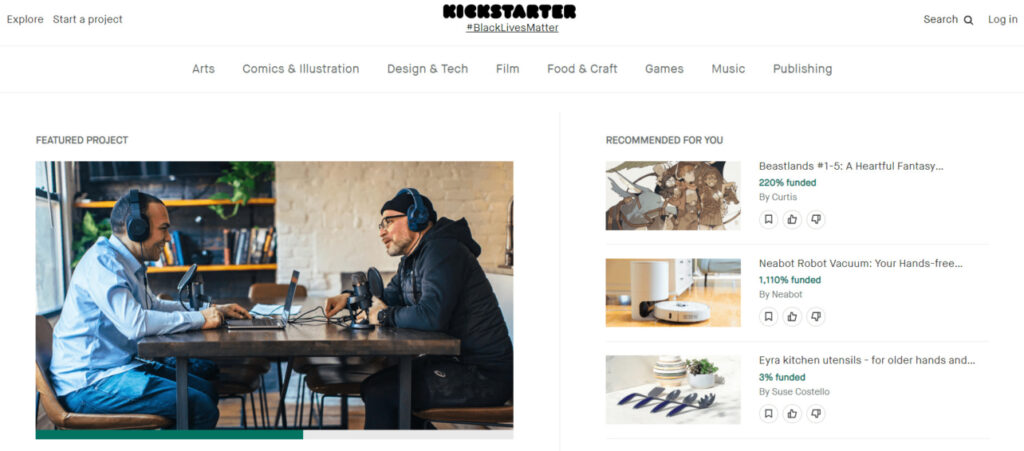
Kickstarter is one of the most well-known crowdfunding platforms, and has helped to launch numerous successful projects and businesses.
The platform focuses on creative projects, including product design, film and video, games, music, and more.
Key Features:
- Rewards-based funding model
- Global community of backers
- Extensive outreach and promotional tools
- High visibility for creative projects
Pros:
- Wide reach and well-established community
- Strong focus on creative projects
- A campaign is simple to set up and launch.
- Robust promotional and outreach tools
Cons:
- Strict guidelines for campaigns and project requirements
- Only offers rewards-based funding
- Campaigns must meet funding goals in order to receive funds
Pricing:
While anyone is welcome to sign up for a free account and participate in the Kickstarter community, creators who begin getting paid for their published projects incur some additional expenses:
- 5% of funds collected are charged, and
- On processing charges, 3% to 5%.
Overall, Kickstarter is a great option for small businesses and entrepreneurs looking to launch a creative project.
With its large community of backers and emphasis on design and innovation, it can be a powerful tool for bringing ideas to life.
Additionally, its rewards-based funding model allows supporters to receive tangible benefits for their contributions, making it a win-win for both the entrepreneur and the backer.
Indiegogo:
Indiegogo is another popular crowdfunding platform that has helped to launch a wide range of projects and businesses.
Like Kickstarter, it offers a rewards-based funding model and focuses on creative projects.
However, it also allows for personal and social cause campaigns, making it a more flexible option for a wider range of projects.
Key Features:
- Rewards-based and flexible funding options
- Global community of backers
- Extensive outreach and promotional tools
- High visibility for a range of campaigns, including creative and cause-related projects
Pros:
- Large audience and a firmly established community
- Offers both flexible funding options and options based on rewards.
- A campaign is simple to set up and launch.
- Strong marketing and outreach tools
Cons:
- Campaigns must meet funding goals in order to receive funds
- Slightly higher fees compared to some other platforms
- Can be more difficult to stand out among the wide range of projects on the platform
Pricing:
Creating an account is free. Similarly, since Indiegogo collaborates with GoFundMe on such projects, fundraisers for a cause are not required to cover expenses.
- Other campaigns, however, must subtract 5% for platform and processing costs.
Overall, Indiegogo is a great option for small businesses and entrepreneurs looking for a flexible crowdfunding platform that allows for a wide range of project types.
Its extensive outreach and promotional tools, along with its well-established community, make it a powerful tool for bringing ideas to life and securing funding for small businesses.
GoFundMe:
GoFundMe is a well-known website for fundraising for both individuals and organizations.
It allows individuals and organizations to create campaigns and solicit contributions from friends, family, and the general public.
The platform is easy to use and offers a wide range of features to help campaigns reach their goals.
Key Features:
- Personal and charitable fundraising platform
- Simple setup and campaign management
- Wide reach through social media integration and email sharing tools
- No time limit on campaigns
Pros:
- Simple and straightforward platform for personal and charitable fundraising
- No time limit on campaigns
- Wide reach through social media and email sharing tools
- No fees for personal campaigns
Cons:
- No rewards-based funding options
- Higher fees for charitable campaigns
- Can be difficult to stand out among a large number of similar campaigns
Pricing:
- There are no platform fees and no cost to create an account.
- However, fundraiser founders must pay a 1.9% processing fee and $0.30 for each transaction.
Overall, GoFundMe is a great option for individuals and organizations looking to raise funds for personal or charitable causes.
Its simple setup and easy-to-use platform make it a popular choice for those seeking funding for a wide range of needs, from medical expenses to disaster relief efforts.
Its social media integration and email sharing tools make it easy to spread the word about campaigns and reach a wide audience.
Patreon:
Patreon is a membership platform that allows creators and artists to earn recurring income from their fans and patrons.
The platform is focused on creative individuals and businesses, such as musicians, writers, podcasters, and more.
It offers a unique way for creative entrepreneurs to build a loyal fanbase and secure a steady income from their work.
Key Features:
- Membership-based platform for creative individuals and businesses
- Recurring income from fans and patrons
- Wide range of tools for creators to engage with their fanbase and build a community
- Ability to offer exclusive content and rewards to members
Pros:
- Unique model for creative entrepreneurs to earn recurring income
- Wide range of tools for engaging with and building a community around a creative project
- Ability to offer exclusive content and rewards to members
- Simple setup and management of membership tiers and payment processing
Cons:
- Limited to creative individuals and businesses
- Can be difficult to build a large and dedicated fanbase
- No rewards-based funding options outside of membership
Pricing:
Although joining the Patreon community is entirely free, artists who want to make money can select one of three plans and then pay a monthly fee:
- The charge fee for the Lite plan is 5%;
- There is an 8% charge fee for the Pro plan; and
- There is a 12% charge fee for the Premium plan.
- For all plans, there is a processing fee in addition to the charge fee of 2.9% and $0.30 per transaction.
Overall, Patreon is a great option for creative individuals and businesses looking to build a dedicated fanbase and earn a recurring income from their work.
Its membership-based model allows creators to offer exclusive content and rewards to their fans, while also providing a steady stream of income to support their creative endeavors.
Its range of tools for building a community around a creative project make it a powerful tool for creative entrepreneurs looking to grow their business and secure their financial future.
Crowdfunder:
Crowdfunder is a crowdfunding platform that specializes in equity funding for startups and small businesses.
The platform connects entrepreneurs with investors, allowing them to secure funding and grow their businesses.
Crowdfunder offers a unique opportunity for startups and small businesses to raise capital and build a network of investors and supporters.
Key Features:
- Equity-based crowdfunding platform for startups and small businesses
- Connects entrepreneurs with investors for funding and support
- Several options and assistance available for business owners
- Ability to build a network of investors and supporters
Pros:
- Unique opportunity for startups and small businesses to secure equity funding and support
- Large selection of information and assistance for business owners
- Ability to build a network of investors and supporters
- Robust due diligence and verification processes to ensure the quality of investment opportunities
Cons:
- Limited to equity-based funding for startups and small businesses
- Higher fees compared to some other crowdfunding platforms
- Can be more complex than rewards-based funding options
Pricing:
Three payment options are provided by Cowdfunder so that every business can find one that meets their needs and expectations:
- The unrestricted plan for the best startups;
- the $299 monthly Starter plan; and
- The $499 monthly Premium plan.
Overall, Crowdfunder is a great option for startups and small businesses looking to secure equity funding and build a network of investors and supporters.
Its focus on equity funding and support for entrepreneurs makes it a powerful tool for businesses looking to grow and succeed.
Its range of resources and support, along with its robust due diligence and verification processes, ensure that investment opportunities on the platform are of the highest quality.
Fundly:
Fundly is a versatile crowdfunding platform that offers a range of options for individuals, nonprofits, and businesses.
The platform offers an easy-to-use fundraising solution for a wide range of needs, from personal causes and events to large-scale charitable campaigns.
Key Features:
- Versatile crowdfunding platform for individuals, nonprofits, and businesses
- Wide range of fundraising options, including personal campaigns, events, and charitable campaigns
- Robust set of tools for creating, managing, and promoting campaigns
- Easy payment processing and donor management
Pros:
- Versatile platform suitable for a wide range of fundraising needs
- Robust set of tools for creating, managing, and promoting campaigns
- Easy payment processing and donor management
- No time limit on campaigns
Cons:
- Higher fees compared to some other crowdfunding platforms
- Can be difficult to stand out among a large number of similar campaigns
Pricing:
- Fundly charges a 4.9% platform fee, plus a payment processing fee of 2.9% + $0.30 per transaction.
- For nonprofit campaigns, the platform fee is reduced to 3.9%.
Overall, Fundly is a great option for individuals, nonprofits, and businesses looking for a versatile crowdfunding solution.
Its range of fundraising options, along with its robust set of tools for creating, managing, and promoting campaigns, make it a powerful tool for fundraising success.
The platform’s easy payment processing and donor management make it a straightforward and convenient option for those seeking funding.
RocketHub:
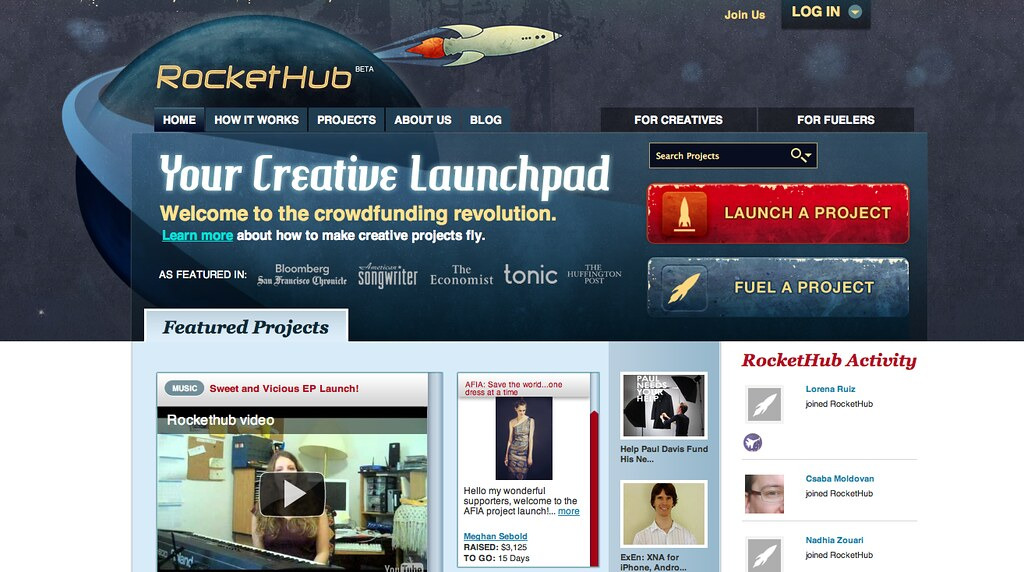
RocketHub is a crowdfunding platform that offers a range of options for individuals, businesses, and nonprofits.
The platform offers a unique blend of crowdfunding and crowd-accelerating, providing funding opportunities and resources for entrepreneurs, creatives, and more.
Key Features:
- Crowdfunding and crowd-accelerating platform for individuals, businesses, and nonprofits
- Numerous funding options, such as grants, loans, and equity investments
- Access to a network of investors, mentors, and resources
- Robust set of tools for creating, managing, and promoting campaigns
Pros:
- Unique blend of crowdfunding and crowd-accelerating
- Wide range of funding options, including grants, loans, and equity investments
- Access to a network of investors, mentors, and resources
- Robust set of tools for creating, managing, and promoting campaigns
Cons:
- Higher fees compared to some other crowdfunding platforms
- Can be difficult to stand out among a large number of similar campaigns
Pricing:
- RocketHub charges a 4% platform fee, plus a payment processing fee of 3% + $0.30 per transaction.
- For campaigns that reach their funding goal, the platform fee is reduced to 2%.
Overall, RocketHub is a great option for individuals, businesses, and nonprofits looking for a unique blend of crowdfunding and crowd-accelerating.
Its range of funding options, access to a network of investors, mentors, and resources, and robust set of tools for creating, managing, and promoting campaigns make it a powerful tool for fundraising success.
The platform’s fees, while higher than some other crowdfunding platforms, provide access to a range of funding options and resources that can help take a campaign to the next level.
Crowdrise:
Crowdrise is a crowdfunding platform focused on social fundraising and fundraising events.
The platform offers a range of options for individuals, nonprofits, and businesses looking to raise funds for a cause, event, or project.
Key Features:
- Focus on social fundraising and fundraising events
- Range of options for individuals, nonprofits, and businesses
- User-friendly platform with a range of customization options
- Integration with popular social media platforms for easy sharing and promotion
Pros:
- Focus on social fundraising and fundraising events
- User-friendly platform with a range of customization options
- Integration with popular social media platforms for easy sharing and promotion
- Access to a community of supportive donors and fundraisers
Cons:
- Limited range of funding options compared to other crowdfunding platforms
- Higher fees compared to some other crowdfunding platforms
Pricing:
- Crowdrise charges a 5% platform fee, plus a payment processing fee of 2.9% + $0.30 per transaction.
- For nonprofit campaigns, the platform fee is reduced to 4.5%.
Overall, Crowdrise is a great option for individuals, nonprofits, and businesses looking to raise funds for a cause, event, or project.
Its focus on social fundraising and fundraising events, combined with its user-friendly platform and integration with popular social media platforms, make it a powerful tool for fundraising success.
The platform’s fees, while higher than some other crowdfunding platforms, provide access to a supportive community of donors and fundraisers that can help take a campaign to the next level.
CrowdSupply:
CrowdSupply is a crowdfunding platform focused on hardware and technology projects.
The platform offers a range of options for individuals, startups, and established businesses looking to bring their hardware and technology products to market.
Key Features:
- Focus on hardware and technology projects
- Range of options for individuals, startups, and established businesses
- User-friendly platform with a range of customization options
- Integration with popular social media platforms for easy sharing and promotion
- Access to a community of supportive backers and experts
Pros:
- Focus on hardware and technology projects
- User-friendly platform with a range of customization options
- Integration with popular social media platforms for easy sharing and promotion
- Access to a community of supportive backers and experts
- Access to a range of resources and support services to help bring projects to market
Cons:
- Higher fees compared to some other crowdfunding platforms
- Limited range of funding options compared to other crowdfunding platforms
Pricing:
- CrowdSupply charges a 7% platform fee, plus a payment processing fee of 3% + $0.30 per transaction.
- For projects that reach their funding goal, the platform fee is reduced to 5%.
Overall, CrowdSupply is a great option for individuals, startups, and established businesses looking to bring their hardware and technology products to market.
Its focus on hardware and technology projects, combined with its user-friendly platform, integration with popular social media platforms, and access to a supportive community of backers and experts, make it a powerful tool for crowdfunding success.
The platform’s fees, while higher than some other crowdfunding platforms, provide access to a range of resources and support services to help bring projects to market and bring hardware and technology products to life.
StartEngine:
StartEngine is a crowdfunding platform focused on helping startups and early-stage companies raise capital.
The platform offers a range of options for entrepreneurs and businesses looking to bring their ideas to life, including equity crowdfunding and Regulation Crowdfunding (Reg CF).
Key Features:
- Focus on helping startups and early-stage companies raise capital
- Range of options for entrepreneurs and businesses, including equity crowdfunding and Regulation Crowdfunding (Reg CF)
- User-friendly platform with a range of customization options
- Integration with popular social media platforms for easy sharing and promotion
- Access to a community of supportive investors and entrepreneurs
Pros:
- Focus on helping startups and early-stage companies raise capital
- Range of options for entrepreneurs and businesses, including equity crowdfunding and Regulation Crowdfunding (Reg CF)
- User-friendly platform with a range of customization options
- Integration with popular social media platforms for easy sharing and promotion
- Access to a community of supportive investors and entrepreneurs
Cons:
- Higher fees compared to some other crowdfunding platforms
- Limited range of funding options compared to other crowdfunding platforms
Pricing:
- StartEngine charges a 5% platform fee, plus a payment processing fee of 3% + $0.30 per transaction.
Overall, StartEngine is a great option for entrepreneurs and businesses looking to raise capital and bring their ideas to life.
Its focus on helping startups and early-stage companies raise capital, combined with its user-friendly platform, integration with popular social media platforms, and access to a supportive community of investors and entrepreneurs, make it a powerful tool for crowdfunding success.
The platform’s fees, while higher than some other crowdfunding platforms, provide access to a range of funding options and support services to help entrepreneurs and businesses take their ideas to the next level.
Conclusion:
Crowdfunding has become a popular way for small businesses to raise capital and bring their ideas to life.
There are many crowdfunding platforms available, each offering its own unique features and benefits.
The 10 best crowdfunding platforms for small businesses in 2023 are Kickstarter, Indiegogo, GoFundMe, Patreon, Crowdfunder, Fundly, RocketHub, Crowdrise, CrowdSupply, and StartEngine.
When choosing a platform, it’s important to consider factors such as fees, funding options, target audience, and specific needs.
By carefully choosing the right platform and taking advantage of resources and support, small businesses can achieve their fundraising goals and bring their ideas to the world.